Retail SEO: How to Drive Foot Traffic to Your Brick-and-Mortar Store
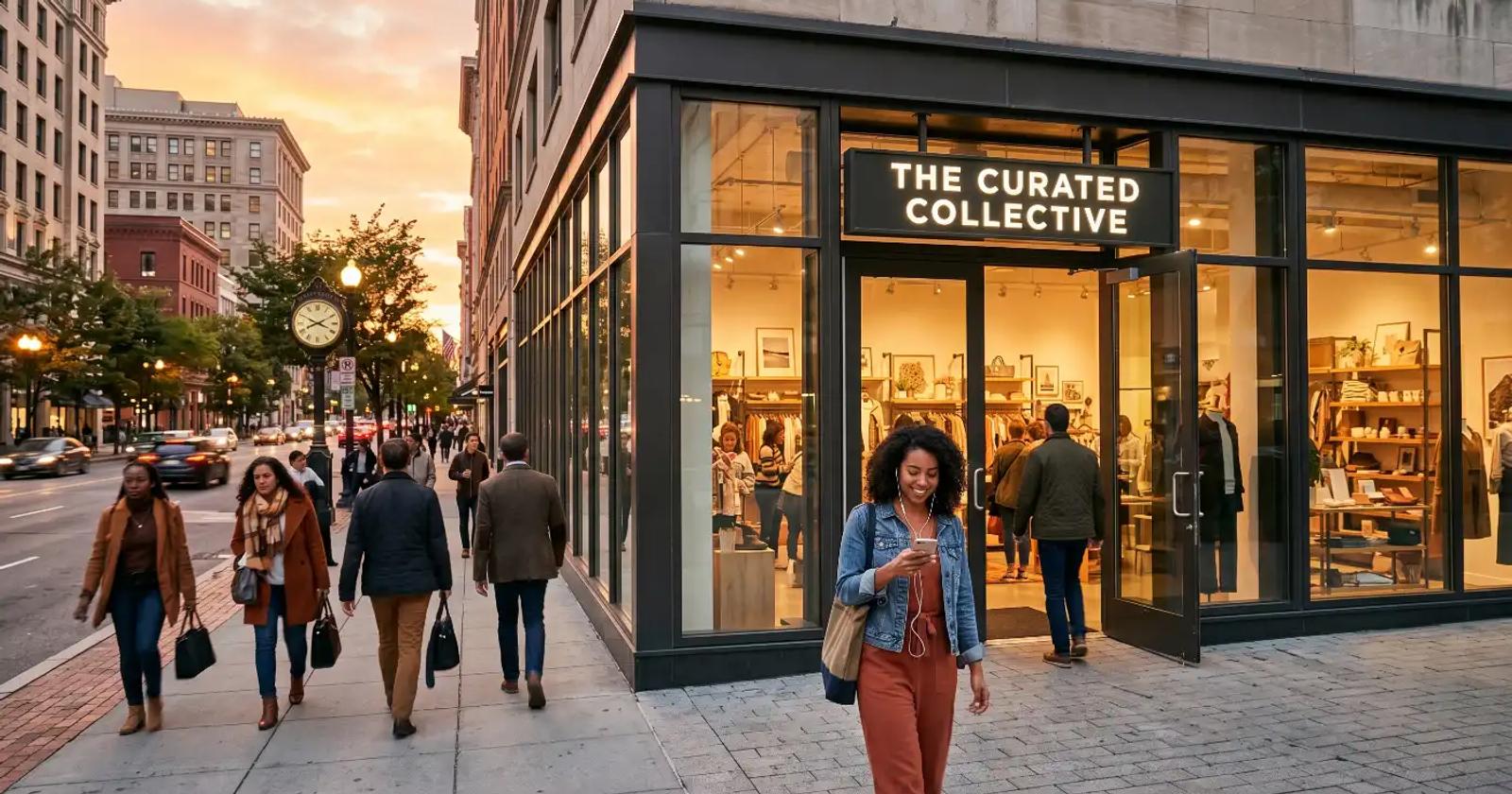
The Local Foot Traffic Blueprint: How to Turn Online Searches Into In-Store Retail Sales
Step into any thriving retail shop, and you will notice a common pattern. Half the people browsing down the aisles are holding smartphones. They are looking at reviews, checking prices, or confirming that an item is actually in stock before they walk up to the cash register.
The traditional wall between digital marketing and brick-and-mortar retail dissolved years ago. Today, your digital storefront is your physical front door. If your business does not show up when a local customer searches for what you sell, you simply do not exist to them.
Driving consistent, qualified foot traffic to a retail store requires a deliberate shift in how you approach search engines. It is no longer just about ranking for broad global keywords. It is about dominating local intent.
When someone searches for a product "near me," they are not looking to fall down a research rabbit hole. They are looking to buy something within the next few hours.
Here is exactly how to optimize your retail presence to capture those ready-to-buy local shoppers and get them walking through your physical doors.
The Modern Reality of the Retail Buyer's Journey
Most retail purchases still happen in physical stores, but almost all of them start with a digital search. Consumers have become hyper-efficient. They want to minimize friction, avoid wasted trips, and know exactly what to expect before they ever turn the ignition in their car.
This behavioral shift has forced a massive evolution in search engine design. Platforms like Google and various AI-driven answer engines now prioritize immediate, hyper-local utility. They want to give users precise maps, accurate operating hours, real-time inventory status, and unedited customer feedback instantly.
If your retail brand’s website and local listings are not structured to feed this data to search engines seamlessly, you are actively giving away market share to the big-box competitor down the street.
To win in this environment, your digital footprint must be flawless. It requires an integrated approach that connects clean website architecture, hyper-local content marketing, and structured real-time data.
Step 1: Claim and Perfect Your Local Map Ecosystem
Your Google Business Profile (GBP)—along with your listings on Apple Maps and Bing Places—is the single most important asset for driving immediate foot traffic. It functions as the digital front window of your retail shop.
Many retailers make the mistake of treating their GBP as a set-it-and-forget-it listing. They fill out the basic business name, add a phone number, and assume the job is done. That baseline effort will not cut it in highly competitive local markets.
To truly optimize your profile, you must treat it like a living, breathing social media and search asset.
Master Your Business Category Hierarchy
Google allows you to choose one primary category and several secondary categories. Your primary category carries immense weight in local search algorithms. Choose the absolute closest match to your core business.
If you run a boutique shoe store, do not just select "Store." Use "Shoe Store." If you specialize in running gear, use "Running Shoe Store." Use your secondary categories to capture secondary revenue drivers, like "Athletic Apparel Store."
Maintain Strict NAP Consistency
Your Name, Address, and Phone number (NAP) must be identical across every single corner of the internet. If your website lists your address as "Suite 400," but your Google profile says "Ste 400" and your Yelp page says "#400," search engines view these minor discrepancies as a sign of untrustworthy data.
According to local search guidelines from Google Search Central, data consistency directly impacts crawling confidence. Clean up your listings across major aggregators to build a rock-solid foundation.
Publish Regular Google Updates and Offers
Treat your Google Business Profile like a mini-blog. Use the "Posts" feature weekly to highlight new product arrivals, announce in-store events, or offer exclusive discounts for local shoppers. This consistent activity signals to search algorithms that your retail location is active, relevant, and highly operational.
Step 2: Implement Localized Keyword Architecture
To attract shoppers who are ready to make a trip to your store, you need to target terms that signal explicit local intent. This means moving beyond generic product descriptions and baking your geographic footprint directly into your website’s DNA.
If you operate multiple retail locations, avoid grouping them all onto a single contact page. Each physical shop needs its own dedicated, highly optimized location landing page.
A well-crafted location page should include:
- Your exact, localized NAP data wrapped in clean Schema markup.
- An embedded, interactive Google Map pointing directly to your listing.
- Hyper-local content, such as specific parking instructions, nearby landmarks, or neighborhood-specific community initiatives.
- Staff picks, unique regional inventory notes, or hyper-local customer reviews.
When writing content for these pages, use natural geographic modifiers. Do not just target your main city name if your store is located in a specific neighborhood or district. Think about how locals actually talk.
If people refer to your area as "The Arts District" or "Midtown," those exact phrases belong in your headings, meta titles, and body copy. This strategy is foundational to modern Search Engine Optimization (SEO), as it aligns perfectly with how modern semantic search engines parse regional intent.
Step 3: Weaponize Real-Time Local Inventory Data
One of the biggest friction points for brick-and-mortar shoppers is the fear of a wasted trip. No one wants to drive across town only to find out that the specific item they need went out of stock an hour ago.
You can eliminate this anxiety entirely by feeding your live product inventory directly into search results. Google’s Pointy tool and the Merchant Center Local Inventory Ads program allow retail stores to connect their physical Point of Sale (POS) systems directly to Google.
When a consumer searches for a specific product in your area, your store will appear with a reassuring "In Stock" label right next to your distance from them. This strategy bridges the gap between online research and immediate physical action.
It transforms a passive digital impression into an active foot traffic lead. If you are curious about how to deploy these types of advanced, data-driven local visibility campaigns, exploring the foundational approach of an agency through our About/Why Atlas page can reveal how we design these systems for scale.
Step 4: Build an In-Store Review Generation Machine
Online reviews are not just vanity metrics. They are a direct local ranking signal and a massive driver of consumer trust. A high volume of fresh, five-star reviews tells search algorithms that your business is relevant, highly trusted, and actively chosen by real consumers in your community.
However, customers rarely leave reviews on their own unless they have a deeply frustrating experience. You have to build a systematic process to capture positive sentiment while the customer is still standing inside your building.
Simplify the Process with Digital Touchpoints
Do not ask customers to look up your store online later. Place clear, stylized signs featuring custom QR codes at your checkout counters and changing rooms. A quick smartphone scan should instantly drop the customer directly onto your Google Business Profile review screen.
Train and Incentivize Your Frontline Staff
Your cashiers and sales associates are your best asset for review generation. Train them to ask for feedback naturally at the point of sale.
A simple, "If you loved your experience today, would you mind scanning this code and mentioning my name? It really helps our local team out," works wonders. You can run monthly internal competitions to reward the team members who pull in the most positive digital feedback.
Respond to Every Single Review
When a customer takes the time to leave feedback, respond promptly. For positive reviews, say thank you and subtly weave in a local keyword or product name (e.g., "We are so glad you found the perfect running shoes at our Austin location!").
For negative reviews, be empathetic, professional, and move the conversation offline immediately. Search engines reward businesses that engage cleanly with their audience.
Step 5: Leverage Local Content Marketing and Community PR
Search engines love businesses that are deeply rooted in their local communities. To prove your local relevance to search algorithms, your digital footprint should extend far beyond your own website.
Consider launching a hyper-local content strategy. Write about community events, collaborate with neighboring businesses on cross-promotions, or sponsor local sports teams and charity drives.
When you sponsor an event, you frequently earn a high-authority backlink from a trusted regional website (like a chamber of commerce, a local news publication, or a non-profit foundation). These regional backlinks are pure gold for local retail SEO.
They provide massive domain authority and signal to search engines exactly where your physical business operates. This broader approach to digital public relations and visibility mirrors the core principles found in our deep dive into Content Marketing, where building authoritative, contextually relevant footprints is the goal.
Designing a Website That Converts Visitors Into Pedestrians
All the local rankings in the world will not help your business if your actual website is clunky, slow, or difficult to navigate on a phone. The minute a user clicks through from a map listing or a local search result, they should instantly find the exact information they need to visit you.
This means your physical address, operational hours, click-to-call phone number, and real-time driving directions must be prominently displayed right at the top of the mobile screen. If a user has to dig through a complex menu just to find out when you close on a Sunday, they will hit the back button and look for an alternative.
Your site speed is equally critical. If your website takes more than a couple of seconds to load on a patchy cellular network, that on-the-go shopper is gone.
Focus on lightweight code, compressed images, and absolute mobile responsiveness. Every structural choice on your site should be engineered to eliminate friction between an online click and an in-person visit. This philosophy forms the bedrock of high-performance Web Design.
Integrating SEO with a Full-Funnel Digital Strategy
While organic search engine optimization is an incredible engine for sustainable, long-term growth, it works best when integrated into a comprehensive marketing ecosystem. To truly dominate a local market, you want to surround your target audience from multiple angles.
For example, pairing your organic local SEO efforts with targeted geo-fenced Paid Media campaigns allows you to show up at the absolute top of the search page for highly competitive terms, even while your organic authority is building. Similarly, utilizing localized Social Media campaigns lets you showcase your in-store experience, highlight exclusive pop-up events, and visually connect with shoppers right in your immediate neighborhood.
Once you successfully get those customers through your doors, the digital loop continues. By capturing their contact information at the register via an interactive loyalty program or digital receipt system, you can feed them into automated Email Lead Generation funnels. This keeps your retail brand top-of-mind and transforms a one-time foot traffic visitor into a highly loyal, lifetime customer.
To see how these moving parts function cohesively in real-world scenarios, reviewing our library of success stories on our Case Studies page offers an look at how multi-channel alignment drives tangible revenue growth.
The Short Version: SEO for Foot Traffic
- Optimize Listings Completely: Claim your Google Business Profile, select precise categories, and keep your NAP data 100% identical everywhere.
- Build Dedicated Location Pages: Create unique landing pages for every physical store location, complete with embedded maps, localized copy, and structured Schema markup.
- Showcase Live Inventory: Connect your physical POS system to Google Merchant Center to display live in-store product availability directly in search results.
- Automate Review Acquisition: Implement instore QR codes and staff incentives to generate a steady stream of fresh, positive Google reviews.
- Earn Local Backlinks: Sponsor local events, collaborate with nearby businesses, and get featured in regional news to build hyper-local search relevance.
- Prioritize Mobile Performance: Ensure your website loads instantly on mobile devices with immediate access to your address, phone number, and hours.
Ready to Dominate Your Local Market?
Scaling a retail business requires more than just keeping the shelves stocked and the lights on. It requires a modern, aggressive digital strategy that captures consumers exactly when they are looking to buy in your neighborhood.
At Atlas Digital, we build comprehensive growth engines designed to connect your online presence directly to your bottom-line revenue. Whether you need an overhaul of your local search presence, hyper-targeted local ad campaigns, or a high-converting website build, we have the expertise to make it happen.
Stop letting your competitors steal the local spotlight. Visit our main hub at Atlas Digital or head over to our Contact Us page today to request a tailored digital growth audit. Let's work together to drive massive foot traffic straight to your storefront.